Monday, August 23, 2010

New Orleans Characters and Misfits Art Showing


Hard to believe seven months have passed since opening 8219 Oak Street Gallery in New Orleans, Louisiana. My business partner packed up her things and left, water pipes broke upstairs, and heavy rains flooded the streets. I am not complaining but, lord its been a rollercoaster. I have no regrets about moving onto Oak street and opening a gallery. The screenscapes have been selling and I am building a great business. I have been inviting other artists to exhibit at 8219 Oak Street Gallery. Ed Taylor's Mardi Gras floats have been selling and I am hoping his art showing is a sellout and he is able to open his own gallery.

My next showing is October 2nd and I will be creating New Orleans characters and misfits. The screenscape portraits will be a revival of Acadian screen masks but, with my touches of found objects and decoration. I created my first "misfit" and his name is JaCk. Have a look and tell me your thoughts

Monday, March 15, 2010

8219 Oak Street Studios New Orleans, Louisiana

Well, a lot has happened since my last blog entry. I am still creating screenscapes on screen windows and doors and my new studio and gallery space allows me to create and display larger screenscapes. I am very thankful for the space we acquired and my new business partner Susan Owen thinks the space is "amazing". Clients tell us our works of art work well together and we have worked hard to create a comfortable welcoming space. Most people working on Oak street have been great and very supportive (there is the occasional negative or undertoning remarks). We just feel at home on Oak street and opening a studio/gallery during these hard times can bring anxiety but, sometimes taking the risks in life helps to build more confidence and inspiration to create more art. How many people can say, " I look forward to going to work today and painting, sculpting, or photographing what I find most beautiful in life."
Oak street is hopping and more and more artists and other business owners are starting to look at Oak street to open their own shops and galleries. Oprah recenlty put Oak street on her list of things that have improved in the nation. New streets, sidewalks, and restored store fronts has brought back the nostalgic Oak street. One feels they have walked back in time and sometimes you get a visitor walking down Oak street and see the excitement in their face that they have found a bit of the past with the new. So, if you ever get to New Orleans stop by Oak Street Studios and have a cup of tea or coffee with us. Does not cost you anything to look or talk.

Saturday, October 3, 2009

Cleaning Overpaint Off Original Painting

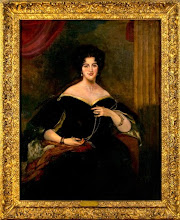
Today, I am finally done cleaning off all of the overpaint on attributed Sir Thomas Lawrence painting. I have posted before and after restoration photos to show the end result (after hours and hours) of cleaning old overpaint off of the artist's original painting. This painting had two other paintings painted over the original painting. Art restorers in the past thought the way to restore or renew paintings was to paint over the original painting. Period paintings darken over time due to old varnish and dirt. Art restorers in the past had no knowledge of how to clean old varnish off of paintings. Some cleaning chemicals were not discovered or invented yet.
Some paintings I can look at and see overpainting done with acrylic paints and not oil paints. When something looks odd I start to think it is time to investigate. There are several tools I use to investigate what is not original to the painting (first tool is a black light instrument). I test painting with different chemicals to remove new paint and varnishes. The work is literally done inch by inch. The old varnish sometimes needs to be scraped off with a conservator's knife and a strong solvent. My client's painting had obvious overpainting with acrylic paints.
Looking at the original painting you can see why some past art restorer thought he or she should paint over the original painting. The painting has areas of missing paint on the woman's face and chest. The areas were filled with plaster, gesso, and a new painting was created. The woman's hairline, shoulder line, and top of dress were all changed. Part of her shoulder was changed into the back of a chair. Before cleaning the sitter's arms had no form and shadowing (the arms looked flat). Some of her pearls were overpainted (she holds a string of pearls between two fingers).
The next challenge is to fill, inpaint, and revarnish painting. My client has not seen the painting for almost a year and I am sure they will be surprized. The painting will have a new home in a Mississippi plantation home. I am thrilled this painting will have a new home and will be admired once again by art lovers. Let me know your thoughts. http://www.tlbartrestoration.com/
Wednesday, September 30, 2009

Conservation Research

Yesterday, I had a client drop off a painting to be surface cleaned. The client thought the painting was created by Rembrandt (1606-1669) 17th Century old master painter. The client acquired the painting from an estate auction at on of Louisiana's plantations. The painting is done well but, the painting is not by Rembrandt. There is a date on the front of the painting in roman numerals the letters appear as MDXVIII (1518). The artist painted the portrait on linen and used small L-shaped cut nails to nail the canvas to the stretcher bars. Nails during the 16th Century were hand forged one by one. The nails on my client's painting were created between 1790-1810 and were made from rods of steel cut to size.
I started to do more research and found out Raphael during the last years of his life did not have time to paint since he was commissioned to work on a huge marble sculpture project in Italy. Raphael lived to the age of 37 years old and many thought during his time period that the art world had lost their greatest artisian and thought his death was a tragedy. Raphael lived during the High Renaissance (the most productive and recognized period in art history). So, who is the young man in the portrait and who is the artist?
The painting was created in Europe and definately done by someone with academic training. During 1790 and 1830 wealthy American families traveled to Italy and marveled at old master paintings. Some families commissioned artists to paint copies of paintings or paintings in the style of old master painters. I have one example of Raphael's self portrait done when he was a young man next to our client's painting. I am thinking there was an artist that studied and admired Raphael's and Titian's portrait paintings and the early 19th Century artist created my client's portrait painting for an American family. Raphael and Titian did have students training in their studios and some students went on to become master portrait painters. http://www.tlbartrestoration.com/
Monday, September 28, 2009

Where to Display Screenscapes

Recently I had a question about where to display some of the larger screenscape paintings (besides over the headboard on the bedroom wall). In our own home in New Orleans we have screenscape paintings in the kitchen. We had space to fill over the cabinets and my collection of mixing bowls and bottles were not enough to fill the spaces (I am still looking for a huge copper stock pot to display and use to make Jerry's fantastic seafood gumbo).
I am still creating screenscapes to display on the ceiling. The screens are hung from the ceiling and show a New Orleans sky with chimney swifts birds flying in the cloudy sky. Chimney swift birds come out in the evenings in the French Quarter and still live in some of the old chimneys. The birds once lived in hollowed out cypress stumps and logs but, they were forced to live in chimneys after cypress swamps were harvested and destroyed the chimney swift birds' habitat.
Here are some display ideas for the screenscapes. Let me know your thoughts. http://www.tlbartrestoration.com/
Tuesday, September 22, 2009

Inspiration from Old Master Paintings

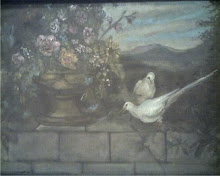
I just finished painting this image on copper screening. The original still life painting was painted by a 17th Century French old master painter. What I like most about the image is the landscape behind the still life (plus the white doves). I changed some of the coloring on the flowers and added a carved stone wall. I like to set the urn close to the edge of the wall to create some depth. Caravaggio used this composition in his still life paintings. Let me know your thoughts.
Visit: http:/www.tlbartrestoration.com/

Sunday, September 20, 2009

Creating Screenscapes

The long process of prep work to paint on screens is never ending. My contractor is able to find old screens for me on his demolition and renovation jobs. The first step is to sort out which screens to clean and rescreen (with copper screening). I sometimes get screens that are crumbling away (oxidation and time have change the screen's strength). The older screens are woven tighter together and the tiny squares are closer together. Once oxidation starts on the screens they start acquiring a patina like a bronze displayed outdoors. Examples of oxidation on bronze is Rodin's 'The Thinker' and the Lion sculptures outside of The Art Institute of Chicago.
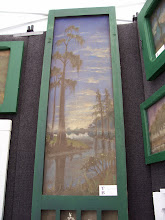
Once screens are cleaned I start painting the frames French Quarter green (a very dark green), off white, or black. I keep the backside of the screen window or transom the original color (to show original color).
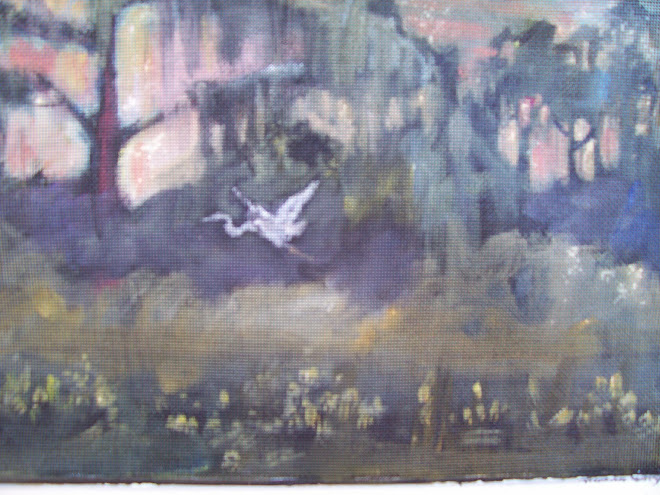
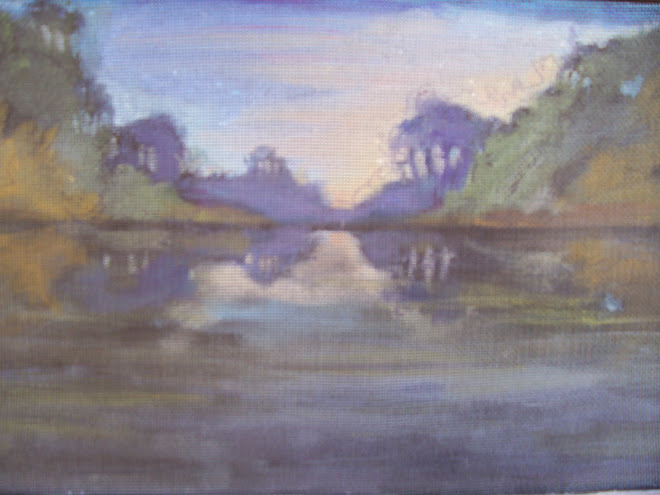
Selecting what landscape is easy. Whatever, landscape and sunset inspires me I paint. I am not able to paint a sunset in fifteen minutes so, I take pictures since a sunset changes constantly within a fifteen minute period. I sometimes add native birds and maybe a flat boat. I do not like to paint people into the landscape since, some patrons ask who the person is and if the person is no one they know they tend to not want the screenscape painting.
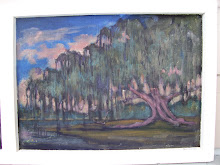
My favorite screenscape paintings are the ones with the huge live oaks with spanish moss hanging from the braches of the trees. I sometimes see children making spanish moss wigs to where on their heads or huge spanish moss resting beds.
I sometimes get commissions to paint Jackson Square or Pirate's Alley on the screens but, landscapes seem to be my most desired images. The waters in Louisiana tend to be a dark brown or green which creates the perfect reflecting pools. Seeing a Louisiana sunset in calm waters is very relaxing and water tends to be a symbol of rebirth for me. Every sunset is different and the colors change from one season to the next. I notice in the fall the colors are more vibrant golds and pinks and peaches. I often wonder if some of the colors in old plantation homes were inspired by a Louisiana sunset.
Creating a screenscape averages about ten hours unless I get a huge window screen that becomes a panoramic landscape view. Visit: http:/www.tlbartrestoration.com/